Sea SafetyHow to
Calling the Coastguard
What to say on the phone, who the Coastguard sends, how boaters raise the alarm by radio, and why nobody should go into the water after someone.
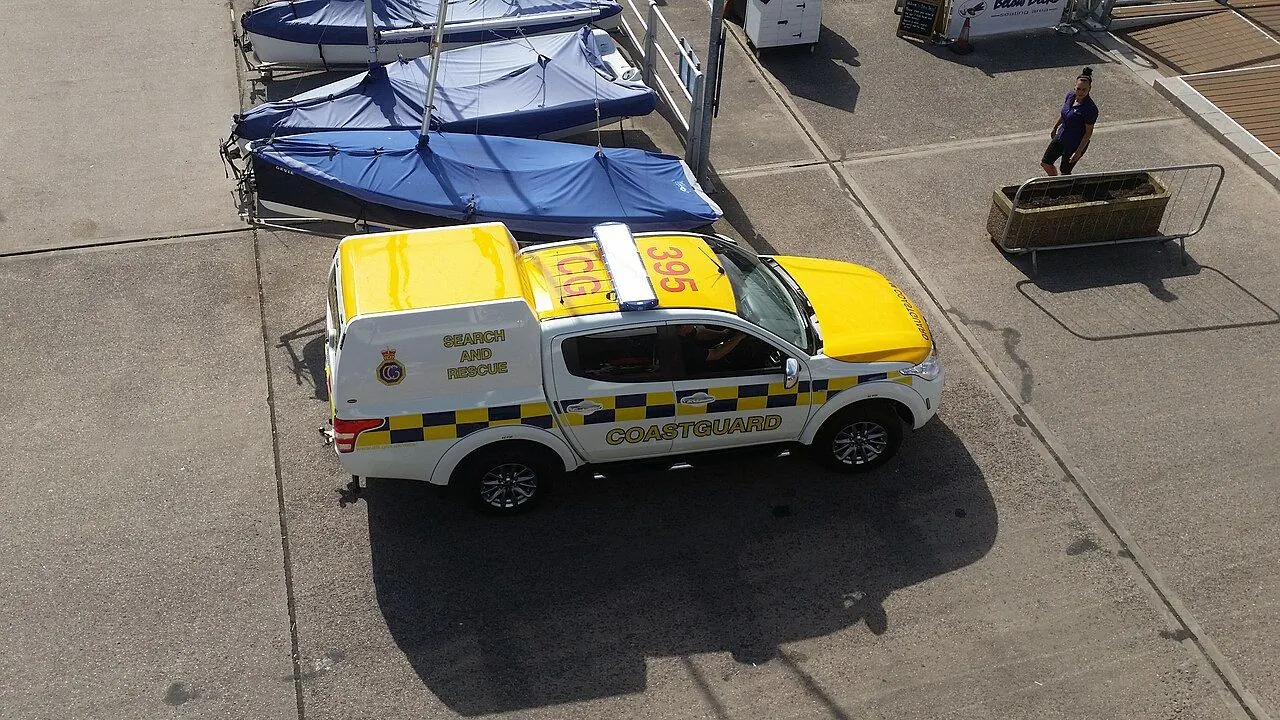
In a coastal emergency, call 999 or 112 and ask the operator for the Coastguard, then say what you have seen, where it is, when it happened and who you are. Your call is directed to one of HM Coastguard's Maritime Rescue Coordination Centres (MRCCs), where the team will coordinate the rescue.
How to make the call and what happens next
Dial 999 or 112 on any mobile or landline and, when the operator answers, ask for the Coastguard. The RNLI notes that even if your phone shows no service, you should try anyway, as an emergency call can use another network. Make the call by voice: the RNLI warns that text messages and shared map locations are often no use to the Coastguard. Be ready to give:
- Where the incident is: the most precise location you can, such as a six-figure OS grid reference, a what3words address, or nearby landmarks, signs, groynes or car parks.
- What you can see and what the problem is.
- How many people are involved, and whether they are in the water, on rocks, on mud or cut off by the tide.
- When it happened, and your name.
Do not wait until you are certain someone is in trouble. A person drifting out on an inflatable or a walker moving towards the edge of the tide is easier to reach early than late.
HM Coastguard is part of the Maritime and Coastguard Agency, and it is the coordinating authority for maritime search and rescue in the UK. It is a government emergency service; the RNLI is a separate charity that works closely with it. Once the MRCC team has your information, it decides what assistance to send and tasks it from its declared rescue resources: RNLI all-weather and inshore lifeboats, independent lifeboats and rescue services, Coastguard Rescue Teams on the shore, and search and rescue helicopters and aircraft. The MRCC then coordinates the response until the incident is over, so keep your phone switched on and nearby in case they call you back.
Calling for help from a boat
On the water a mobile signal cannot be relied on, and the recognised way to call for help is a marine VHF radio. International VHF Channel 16 (156.800 MHz) is used for distress, safety and calling. If your radio has Digital Selective Calling (DSC), HM Coastguard's advice in grave and imminent danger is to press and hold the distress button until the alert is sent, wait 15 seconds, then make a Mayday voice call on Channel 16 on high power: "Mayday, Mayday, Mayday", your vessel's name three times, your call sign or Maritime Mobile Service Identity (MMSI), your position, the nature of the distress, the help you need and the number of people on board. If your set has no DSC, make the Mayday call by voice on Channel 16. Using a VHF radio requires an operator's certificate and a radio licence from Ofcom; check the current rules on the Ofcom and RYA websites before you go afloat.
If someone is in the water
The urge to jump in and save someone is powerful, but HM Coastguard's advice is clear: don't enter the water and stay back from rough seas. Alert the lifeguards if you are on a lifeguarded beach, call 999 or 112 and ask for the Coastguard, tell the person to float on their back, and look for a lifebelt or throw bag you can throw to them. Never try to rescue a person or an animal from cliffs or mud yourself. Too many people drown trying to save others; the fastest help is a clear, early call.