LifeboatsDecoder
RNLI Lifeboat Classes Explained
From the 5-metre D class to the 17-metre Severn, how the RNLI's inshore and all-weather lifeboats differ and where each one works.
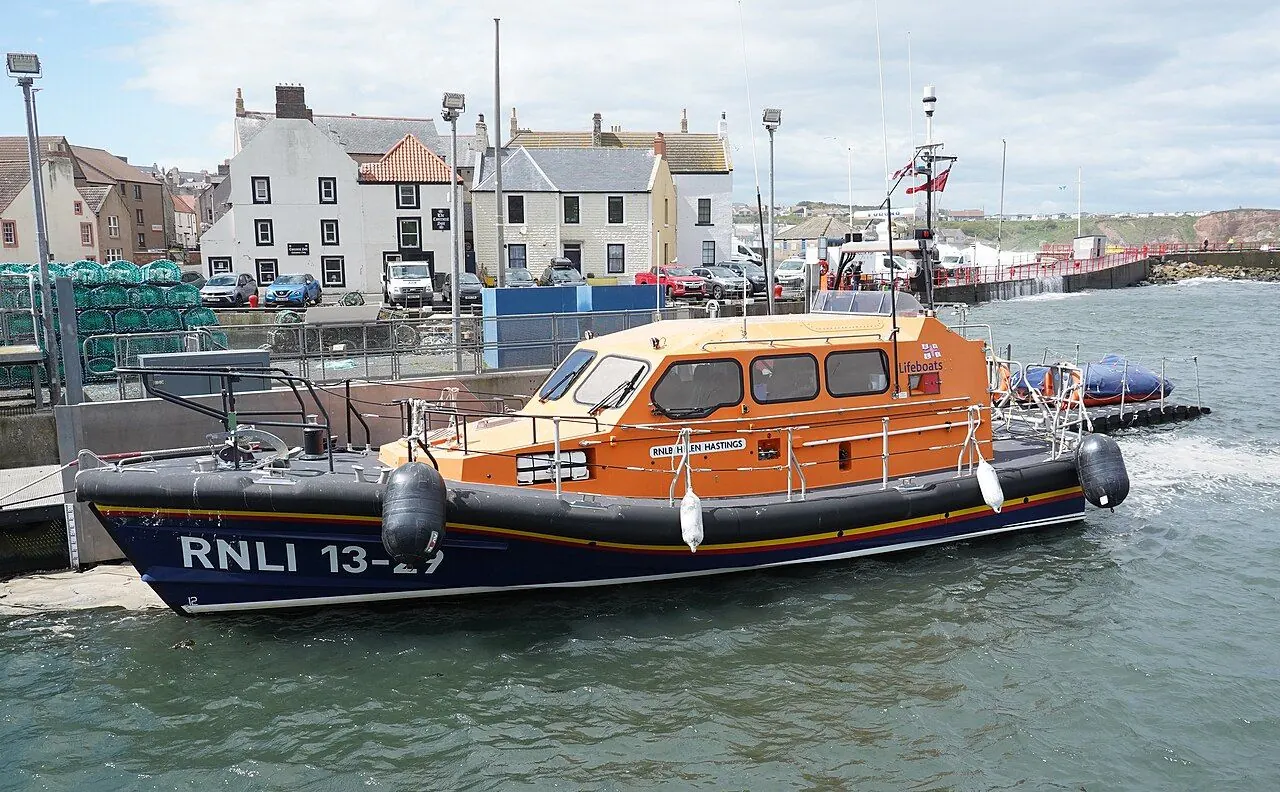
RNLI lifeboats fall into two categories, all-weather lifeboats and inshore lifeboats, plus specialist rescue hovercraft. The key difference is where and in what conditions each class is built to work: inshore boats close to shore, all-weather boats far out to sea in any conditions.
The RNLI fleet at a glance
The RNLI's fleet spans a range of boats, from small inflatable inshore craft to large all-weather lifeboats. Inshore lifeboats usually operate closer to shore, in shallower water and near cliffs, rocks and caves, and are designed to be quick and manoeuvrable. The inshore fleet is made up of the B and D class lifeboats, plus E class lifeboats on the River Thames. RNLI rescue hovercraft fill a specialist niche in places conventional lifeboats cannot reach, such as mud flats and river estuaries; they are on station at Hoylake, Hunstanton, Morecambe and Southend.
All-weather lifeboats are capable of high speed, can be operated safely in all weather conditions and are self-righting after a capsize. The RNLI's fleet page lists the all-weather fleet as the Shannon, Severn, Trent and Tamar classes; the older Mersey class was the RNLI's first fast carriage-launched lifeboat.
| Class | Type | Length | Top speed | Crew | Launch |
|---|---|---|---|---|---|
| D class | Inshore | 5m | 25 knots | 3–4 | Trolley or davit |
| B class Atlantic 85 | Inshore | 8.44m | 35 knots | 3–4 | Carriage, davit or floating boathouse |
| Rescue hovercraft | Inshore | 8.04m | 30 knots | 2–4 | Transporter and slipway |
| Shannon | All-weather | 13.6m | 25 knots | 6 | Carriage, slipway or afloat |
| Trent | All-weather | 14.3m | 25 knots | 6 | Afloat |
| Tamar | All-weather | 16.3m | 25 knots | 7 | Slipway or afloat |
| Severn | All-weather | 17.3m | 25 knots | 7 | Afloat |
Inshore boats: D class and Atlantic 85
The D class is the smallest boat in the table and, in the RNLI's words, the workhorse of the fleet, with more than 50 years' service. At 5m long it suits surf, shallow water and rescues close to rocks and cliffs, and its small size means it can be launched from a trolley or a davit where a bigger boat could not work. Tidal zones, surf beaches and river mouths are where a D class is most likely to be seen.
The B class Atlantic 85 is a rigid inflatable, bigger and faster than the D class: at 35 knots it is one of the fastest boats in the fleet, and it has room for four crew and more kit. At the time of writing the RNLI puts the cost of a D class at £101,000 and an Atlantic 85 at £322,000.
All-weather lifeboats: the offshore fleet
All four modern all-weather classes share a top speed of 25 knots and a range of 250 nautical miles. The Shannon is the newest, and the RNLI calls it its most agile and manoeuvrable all-weather lifeboat yet: it is driven by waterjets rather than propellers and can be launched from a carriage or a slipway, or lie afloat. At the time of writing a Shannon costs £2.78 million. The Severn, at 17.3m, is the largest lifeboat in the RNLI fleet, while the Tamar was designed to launch from a slipway and can also lie afloat. The Trent was the RNLI's first all-weather lifeboat capable of 25 knots and lies afloat.
The type of lifeboat a station has depends on its geography, the kind of rescues it deals with and the cover provided by neighbouring stations, so some stations have one boat and others have both an all-weather and an inshore lifeboat. From a beach or pier, the boat most likely to be seen at work close in is an inshore lifeboat; when a bigger all-weather lifeboat launches, the casualty is usually further out to sea or the weather is too rough for a smaller boat.