HistoryHistory
The Grace Darling Story
How a lighthouse keeper's daughter on the Farne Islands became one of the most celebrated heroines of the Victorian age, and what the legend added.
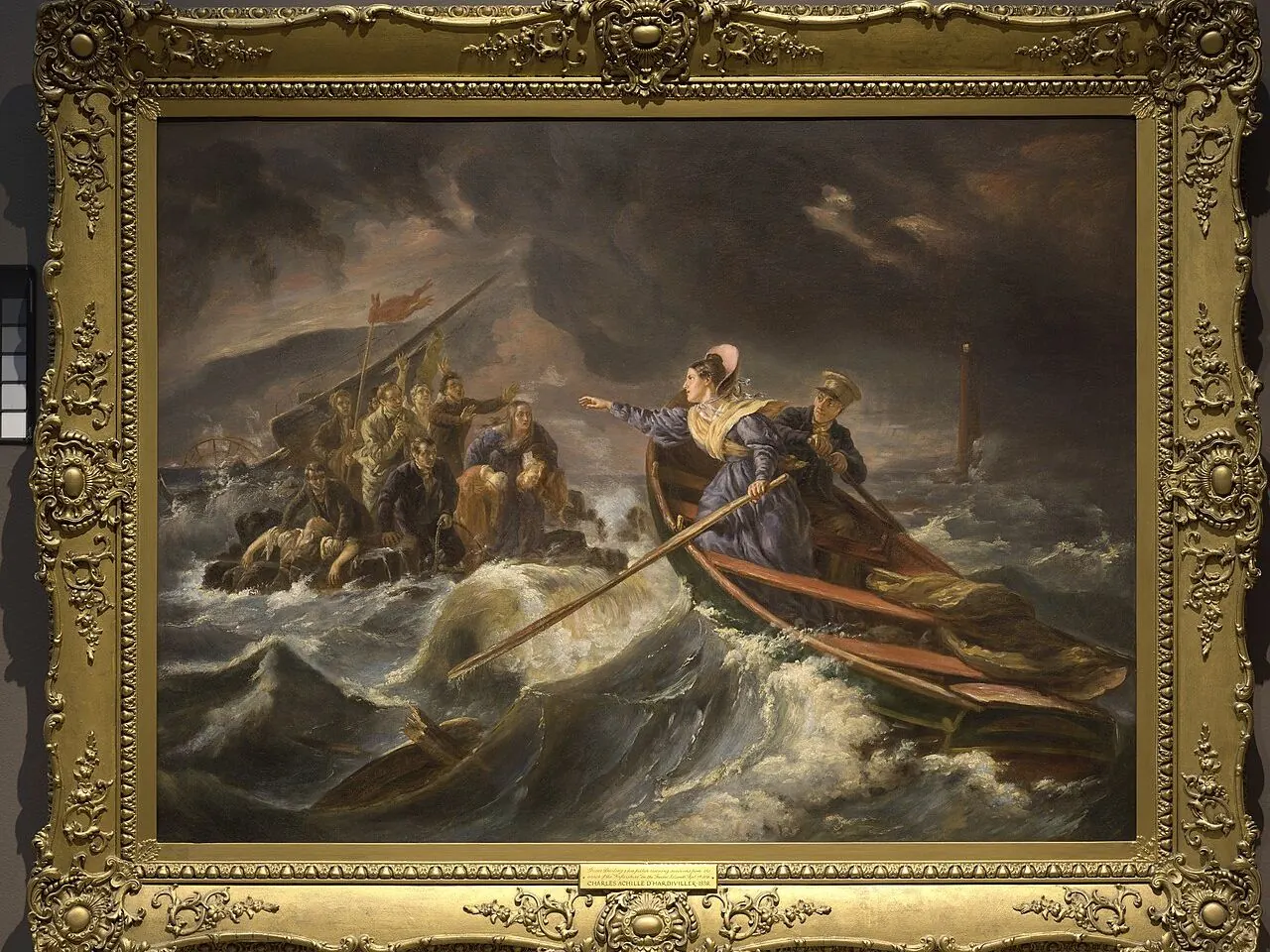
Grace Darling was the 22-year-old daughter of the Longstone lighthouse keeper who, with her father William, rowed a small coble through a storm on 7 September 1838 and saved nine survivors of the wrecked paddle steamer Forfarshire in the Farne Islands off Northumberland.
The wreck of the Forfarshire
In the early hours of 7 September 1838, the paddle steamer Forfarshire ran aground on Big Harcar, a rocky outcrop of the Farne Islands about a mile from the Longstone Lighthouse, and split in two. She had 63 people on board, and most were lost. Looking out from the lighthouse during the storm, Grace spotted the wreck and the people still clinging to the rock. With her brothers away, only Grace and her parents were at the lighthouse.
The rescue in the coble
Grace and William Darling took their small rowing boat, a coble, even though the waters were turbulent and the route around the rocks was long and dangerous in the rough weather. When they reached Big Harcar, Grace held the coble steady beside the rock while William climbed out to reach the survivors. On the first trip they brought a woman passenger and four men back to the lighthouse, where Grace looked after them. William then returned with two of the rescued men and took off the last four. In this way, all nine people still alive on the rock were saved.
Fame, medals and an early death
After that, Grace Darling became a sensation in the Victorian press, and pictures and stories of her spread across the country. Grace and William were each awarded the Silver Medal for Gallantry by the National Institution for the Preservation of Life from Shipwreck, the body that later became the RNLI. Grace also received a gold medal from the Royal Humane Society, and Queen Victoria sent her £50. Many retellings added myths, such as the idea that she rowed out alone or talked her father into going.
Grace never married and remained at the Longstone Lighthouse to help her parents. In 1842 she fell ill on a visit to the mainland and died of tuberculosis in October 1842, aged 26. She is buried in St Aidan's churchyard in Bamburgh.
A museum dedicated to her opened in Bamburgh in 1938, the centenary of the rescue, and it has been in the RNLI's care ever since. The RNLI Grace Darling Museum, opposite St Aidan's church, is the place to see her story told in full, together with the coble itself.