Station archive
D Class Lifeboat – ‘Spirit of Jupiter’
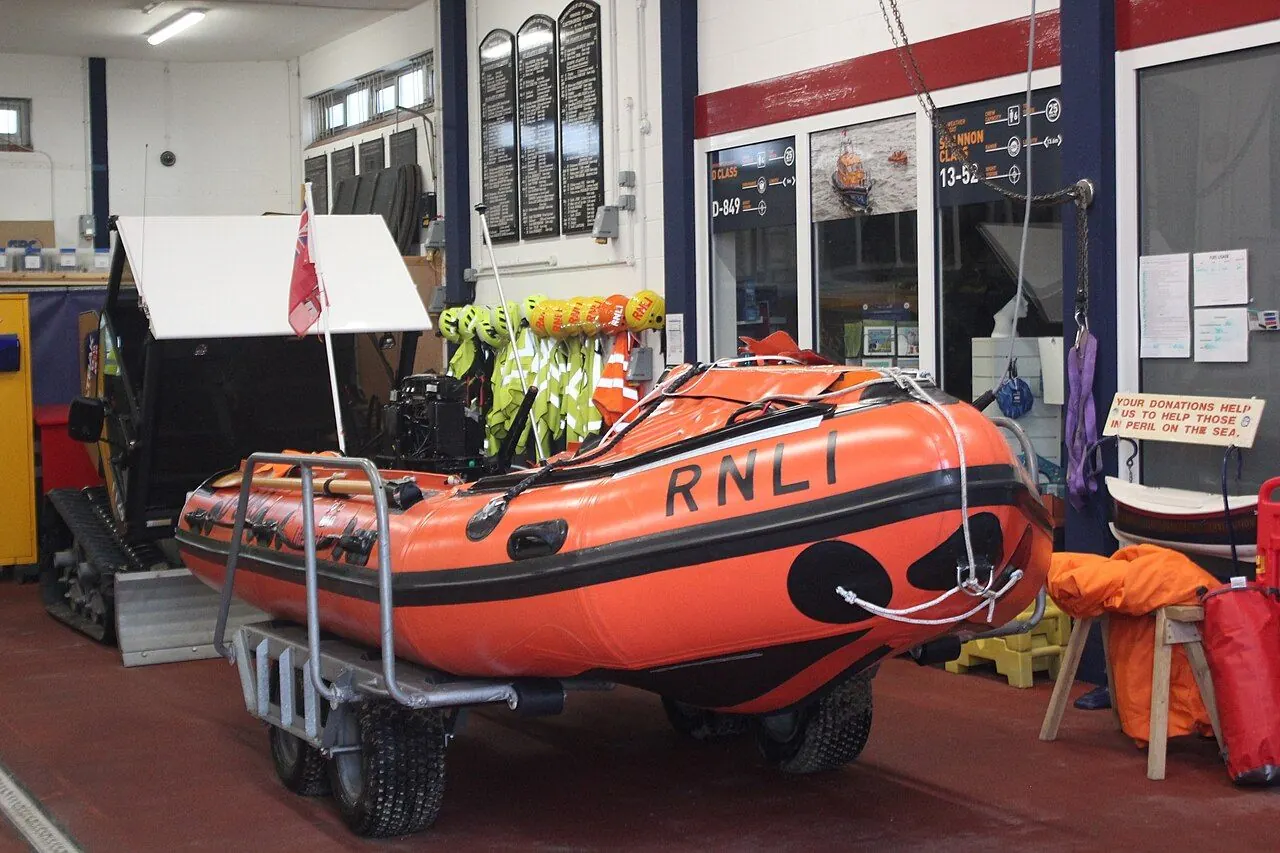
The D class Lifeboat was the first RNLI inflatable lifeboat, introduced in 1963, and has become the workhorse of the RNLI for during the last 40 years. The design of the D Class has continued to evolve since its introduction, and Spirit of Juniper is the latest generation of the D Class, known as the IB-1.
The IB-1 is equipped with a single 50hp outboard engine and is ideal for rescues close to the shore where larger lifeboats cannot operate. It can be righted manually by the crew after a capsize and unlike its predecessors, is not restricted to daylight operation. The boat has a crew of 2 or 3, is 16 feet long and has a speed of 25 knots.
The D Class lifeboat is launched from a trolley and can stay at sea for around three hours.
D Class Specification:
Length: 5m (16 ft)
Engine: 50 hp
Speed: 25 knots
Displacement: 338 kg (745 lbs)
Construction: Hypalon coated polyester
Range: Three hours at 20 knots
Crew: 2/3