BoatingDecoder
Beaufort Scale Explained
What each Beaufort force number in a marine forecast means for wind, waves and anyone heading out in a small boat or on a paddleboard.
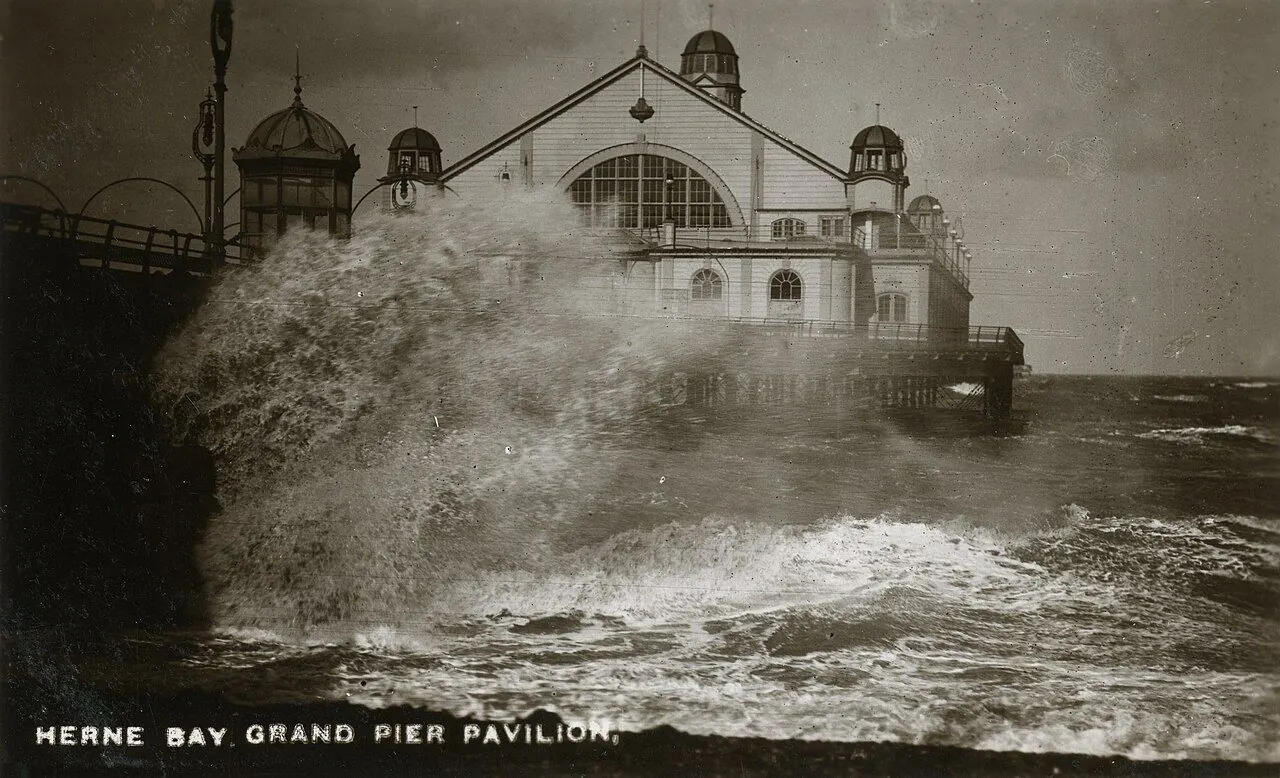
The Beaufort wind force scale is a shorthand for reading wind strength and sea state from a forecast: it runs from Force 0 for calm to Force 12 for hurricane, and the Met Office pairs each force with a wind speed in knots and a description of the sea.
Beaufort force numbers at a glance
These are the Met Office figures that link each force to a wind speed in knots and a sea-state label:
| Force | Name | Wind speed (knots) | Sea state |
|---|---|---|---|
| 0 | Calm | under 1 | Calm (glassy) |
| 1 | Light air | 1–3 | Calm (rippled) |
| 2 | Light breeze | 4–6 | Smooth (wavelets) |
| 3 | Gentle breeze | 7–10 | Slight |
| 4 | Moderate breeze | 11–16 | Slight to moderate |
| 5 | Fresh breeze | 17–21 | Moderate |
| 6 | Strong breeze | 22–27 | Rough |
| 7 | Near gale | 28–33 | Rough to very rough |
| 8 | Gale | 34–40 | Very rough to high |
| 9 | Strong gale | 41–47 | High |
| 10 | Storm | 48–55 | Very high |
| 11 | Violent storm | 56–63 | Very high |
| 12 | Hurricane | 64 and over | Phenomenal |
The Met Office's specification for use at sea gives a quick visual. At Force 0 the sea is like a mirror. At Force 1 there are ripples with the appearance of scales but no foam crests. By Force 4 the waves are small but becoming longer, with fairly frequent white horses, and at Force 6 large waves begin to form and white foam crests are more extensive everywhere. At Force 7 the sea heaps up and foam from breaking waves starts to blow in streaks, and at Force 8 the edges of the crests begin to break into spindrift. At Force 12 the air is filled with foam and spray and the sea is completely white. The Met Office notes these descriptions are for the open sea, remote from land; near the coast or in enclosed waters the waves will be smaller but steeper.
Where the scale came from and how forecasts use it
Francis Beaufort devised his scale of wind force in 1805, when serving aboard HMS Woolwich, and the Admiralty ordered its use in the logs of Royal Navy ships in 1838. The Met Office says it remains in use today, especially in marine forecasting: the wind in the Shipping Forecast and the inshore waters forecast is given as a direction and a force.
A gale is defined as winds of at least Force 8, 34 to 40 knots (roughly 39 to 46 miles per hour), or gusts reaching 43 to 51 knots. Force 9 is a severe gale in forecast language, and storm starts at Force 10. Remember that the force number is not a speed in miles per hour, and that a forecast of Force 5 or 6 with higher gusts can feel very different close inshore.
What to check before going out
There is no single official Beaufort limit for every small boat, paddler or swimmer; the right limit depends on the craft, your experience and the place. Many problems start long before a gale. The RNLI advises paddlers to check the forecast, including the gusts and the wind direction, as well as the tide times before setting out. Offshore winds, blowing from the land out to sea, can quickly carry a paddleboard or inflatable far from the beach even when the water close in looks calm. If the wind is blowing away from the land, the RNLI's advice is not to take the risk.
Use the Beaufort number as a first read of both wind and sea, then read the full inshore waters forecast for your stretch of coast, check the tide, and ask a lifeguard or local club if you are unsure. If you see someone in trouble on the water, call 999 or 112 and ask for the Coastguard.
Sources checked
- weather.metoffice.gov.uk/guides/coast-and-sea/beaufort-scale
- weather.metoffice.gov.uk/guides/coast-and-sea/glossary
- metoffice.gov.uk/binaries/content/assets/metofficegovuk/pdf/research/library-and-archive/library/publications/factsheets/factsheet_6-the-beaufort-scale_2023.pdf
- metoffice.gov.uk/research/library-and-archive/archive-hidden-treasures/beaufort-scale